
 Deutsch
 English
 Español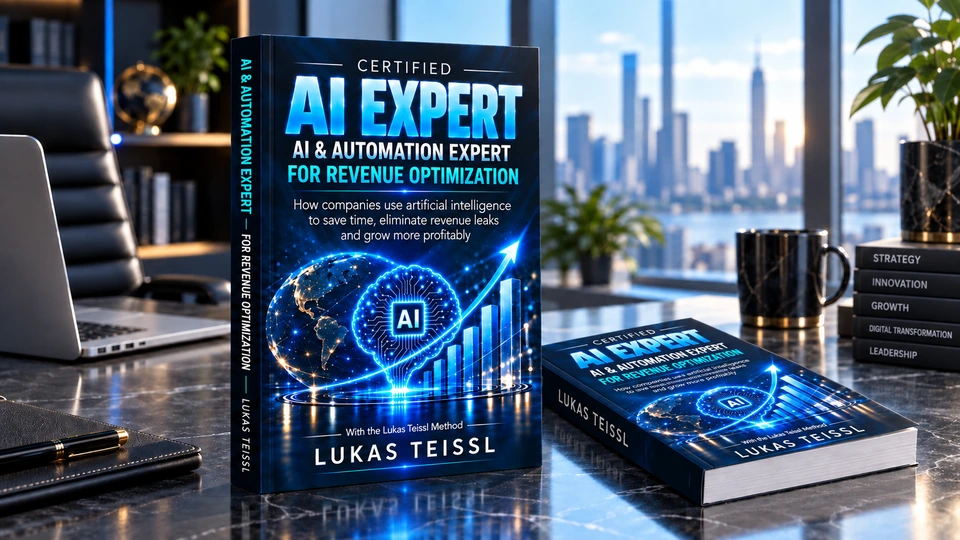

Duplicate data entry
Information is re-entered across multiple systems, spreadsheets or lists – creating unnecessary work and increasing the risk of errors.

I analyse how your business actually works today – from processes and data to sales, communication and recurring tasks. The result is a prioritised roadmap. Where useful, I can implement the technical solutions directly.
My practical guide for business owners
AI & automation for revenue optimisation
In my book, I explore how AI and automation connect to concrete business goals. When we work together, I take the next step with you: from analysing your workflows to implementing a technical solution that fits your business.
Free introductory call · Personal & no obligation
Time loss, errors and unnecessary costs usually arise where people, processes and systems do not work together cleanly. The consulting process therefore looks at the business as one connected workflow.
Information is re-entered across multiple systems, spreadsheets or lists – creating unnecessary work and increasing the risk of errors.
Recurring administration consumes specialist time even though parts of the workflow can be simplified or automated reliably.
Status, ownership and the next step are not visible centrally. Follow-up questions and waiting times become the normal way of working.
Leads, appointments, proposals, documents and follow-ups run through different channels and lose consistency as a result.
Individual AI tools have been tested, but they are not integrated into clear processes or reliable quality control.
More clients, data or employees increase complexity and coordination needs instead of making the organisation more scalable.
The analysis is not a generic workshop or a loose collection of technical ideas. It creates clarity about what should actually be improved, in what order and with what expected outcome.
Business model, objectives, roles, systems, data sources and customer journeys are examined in the real working context.
Shared understanding of the problemBottlenecks, tool hand-offs, recurring tasks, risks and technical dependencies are documented transparently.
Traceable current stateMeasures are assessed by their impact on time, quality, cost and customer experience, as well as by effort and risk.
Sound basis for decision-makingSuitable process changes, integrations, automations or custom systems are implemented step by step.
Working solution instead of a presentationA better outcome usually does not come from one isolated measure, but from the coordinated interaction of workflows, automation, systems and customer experience.
Workflows become simpler, responsibilities clearer and handovers more reliable.
AI is used selectively where it creates measurable value.
Existing tools are connected sensibly or selectively extended where needed.
A consistent process is created from first contact through ongoing collaboration.
Data protection, access rights, logging, backups and human oversight are considered during the design phase – not only after technical implementation.
Custom software is one option – but not automatically the best one. What matters is which approach delivers the desired value with reasonable effort and risk.
If a system is fundamentally suitable, the biggest gains often come from better configuration, clearer roles and cleaner workflows.
When several tools are needed, integrations and automated data flows can create an economical overall solution.
When specialised processes, roles or competitive advantages justify it, a tailored application can be built instead of an overloaded compromise.
The following systems are concrete examples of how tasks, clients, projects, documents, sales and automations can be brought together in a clear digital structure.
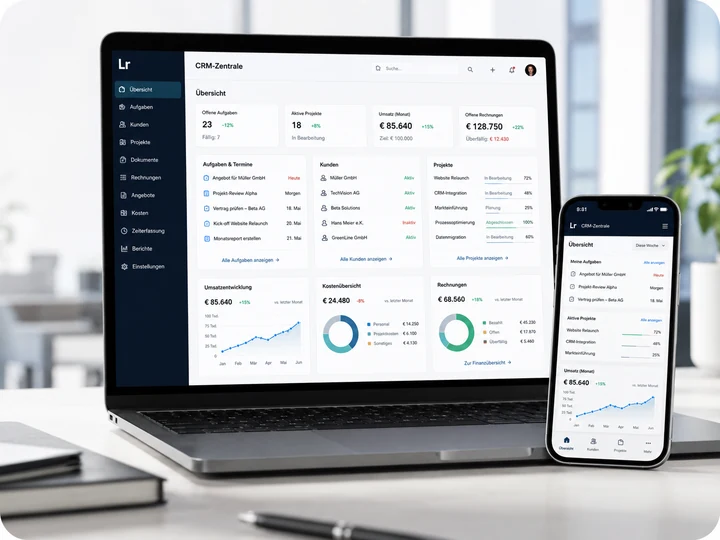
Tasks, clients, projects, invoices, costs, deadlines and key control areas in one connected workspace.
Open live system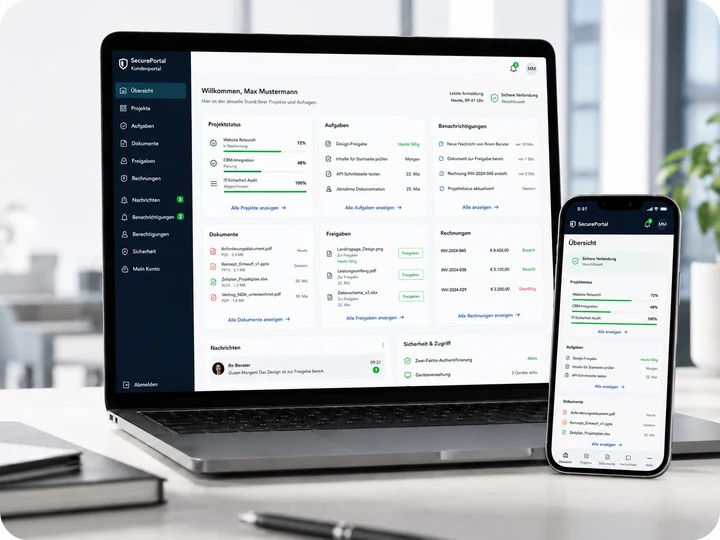
Project status, tasks, documents, approvals, invoices, messages and access in one clear place.
Open live system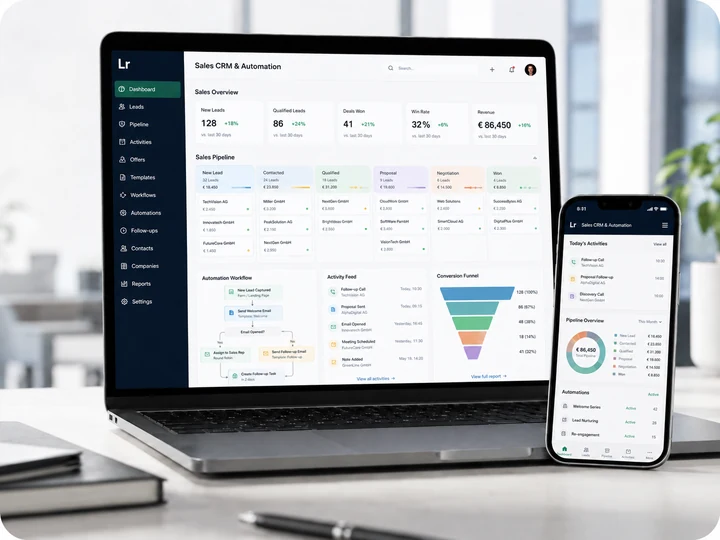
Leads, activities, follow-ups, proposals, workflows and automations for a traceable sales process.
Open live systemAs an IT expert, certified programmer and entrepreneur, I assess not only what is technically possible. What matters is business value, the real working environment, feasibility and an outcome that remains understandable and controllable over time.
The scope depends on the actual problem. A project can begin with one critical workflow and be expanded later.
Discuss an open question personallyThat depends on the starting point. It may be a focused review of a single process or a cross-functional analysis. Scope, objective and expected outcome are clearly defined in advance.
No. Better configuration, clearer workflows or connecting existing systems are often more economical. Custom software is recommended only when it provides clear additional value.
In many cases, yes. Available interfaces, data quality, permissions, security and technical constraints are decisive. These points are reviewed before any binding implementation.
Typical areas include structured processing of enquiries and documents, communication preparation, knowledge access and task or reminder logic. Clear processes, suitable data and defined human oversight are prerequisites.
Before implementation, suitable criteria are defined, such as fewer manual steps, shorter processing times, better data quality, transparent responsibilities or more reliable follow-ups. There are no unsupported revenue or success guarantees.
Yes. Prioritised implementation in manageable stages is often more sensible than a major all-at-once rebuild. Experience from real use can then inform the next steps.
Briefly describe the current situation. A few concrete sentences are enough for an initial conversation.