
 Deutsch
 English
 Español
Invest 20–30% of Your Income: A Practical System for Building Wealth
How to direct a fixed share of your net income towards reserves, a diversified portfolio and long-term goals.
Contents
- The problem: a good income is not the same as wealth
- 20–30% is a target range, not a rigid rule
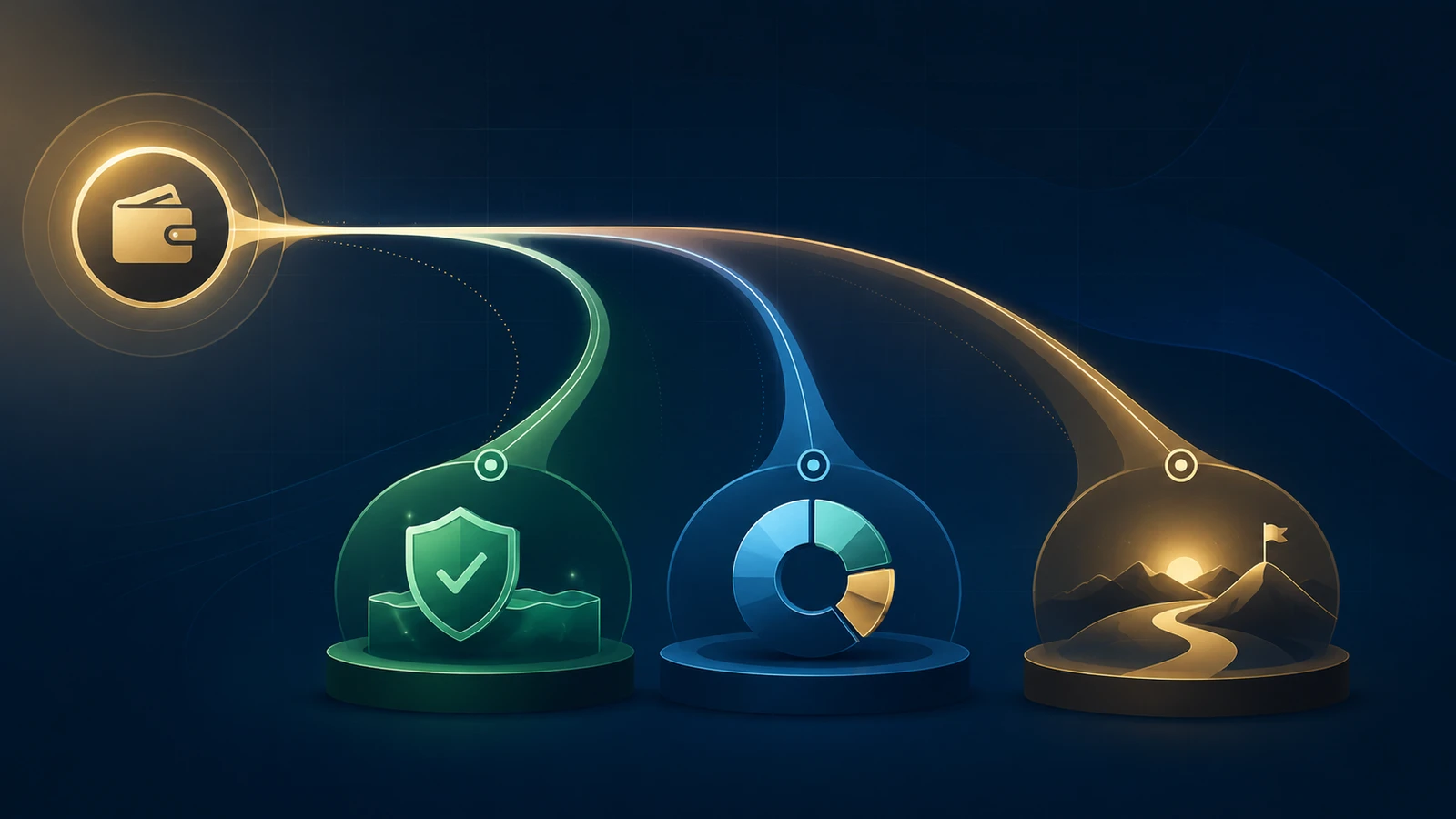
- The solution: spread risk through a three-layer portfolio
- 1. Protection and liquidity
- 2. A diversified core portfolio
- 3. Goals and deliberately limited opportunities
- A simple example
- Automation is stronger than willpower
- Your income should finance two lives
- Choose your next step
- Review your portfolio structure
- From Income to Freedom
- Build your system step by step
- Conclusion

Lukas Günther Teissl
Certified IT Expert
AI, IT consulting, automation & business optimisation
- 15+ years of experience
- 65+ IT certifications
- German, English, Spanish & Italian
- contact@lukasteissl.com
What happens when you earn well for years but never decide how much of today’s income should belong to your future life? In many cases, the problem is not insufficient income but missing structure: everything flows into the current lifestyle, reserves remain accidental and investments are made only when something happens to be left over.
The problem: a good income is not the same as wealth
A strong or stable income can create a sense of security. It is not a substitute for an accessible reserve, nor is it a portfolio that grows automatically. When you remain completely dependent on the next paycheque, an unexpected bill, a period without income or one concentrated decision can quickly create pressure.
The good news is that you do not need the perfect investment or a complicated financial plan. You first need a resilient order of priorities and a fixed share that is consistently reserved for your future.
20–30% is a target range, not a rigid rule
For people who can cover essential expenses, have expensive debt under control and retain enough financial flexibility, 20–30% of net income can be an ambitious target range. This share does not have to be invested entirely in capital markets. It can combine an emergency reserve, a long-term portfolio and personal future goals.
When that range is not realistic today, wealth building can still begin. A consistent 5% or 10% remains valuable, especially when it is automated and gradually increased. The key is not to start with the perfect amount, but to turn a good intention into a dependable system.
The most important question is not: Which investment should I buy this month? It is: What fixed share of my income will automatically be assigned to my financial future every month?
The solution: spread risk through a three-layer portfolio

1. Protection and liquidity
An accessible reserve reduces the risk of having to borrow money or sell long-term assets when an unexpected expense occurs. The appropriate amount depends on your fixed costs, obligations, income stability and personal need for security. The Consumer Financial Protection Bureau notes that even relatively small financial shocks can have lasting consequences when no savings buffer exists.
2. A diversified core portfolio
The long-term portion should not depend on a single product, share, property or crypto asset. Sensible diversification spreads risk across asset classes, regions, sectors, time horizons and levels of liquidity. Investor.gov explains that an appropriate asset allocation depends on time horizon and risk tolerance.
3. Goals and deliberately limited opportunities
A smaller flexible portion may support education, a business, major purchases or carefully limited opportunities. Higher-risk positions belong here only after the basic structure is stable and a possible loss would remain financially manageable.
A simple example
With a net monthly income of €3,000 and a 25% future allocation, €750 could be structured as follows:
- €250 towards an emergency reserve until the personal target is reached.
- €400 towards a diversified long-term core portfolio.
- €100 towards education, major goals or deliberately limited opportunities.
Once the reserve is complete, its monthly contribution can be reassigned. The system therefore evolves with your life instead of remaining rigid.
This calculation is provided solely for illustration. It is not a return forecast and excludes taxes, fees, inflation, market volatility and possible losses.
Automation is stronger than willpower
A practical first step is an automatic transfer shortly after each salary payment. Instead of saving and investing whatever happens to remain at the end of the month, you reserve the agreed future contribution first.
Investing equal amounts at regular intervals can also reduce the need to predict the perfect market entry point. This systematic approach is commonly known as dollar-cost averaging.
A sound system does not require daily intervention. It needs clear rules, periodic review and, where appropriate, rebalancing—not impulsive decisions driven by fear or excitement.
Your income should finance two lives
Your income should support your life today. A clearly defined share should simultaneously build security, ownership and options for your future life.
Financial self-determination does not begin with the latest product or market trend. It begins with giving a fixed share of your income a long-term purpose.
Choose your next step
You can explore the topic on three levels: personally and strategically, independently through the book or step by step through the course.
Review your portfolio structure
Examine objectives, liquidity, existing holdings, concentrations and risks through a transparent framework—without return promises.
Explore portfolio strategy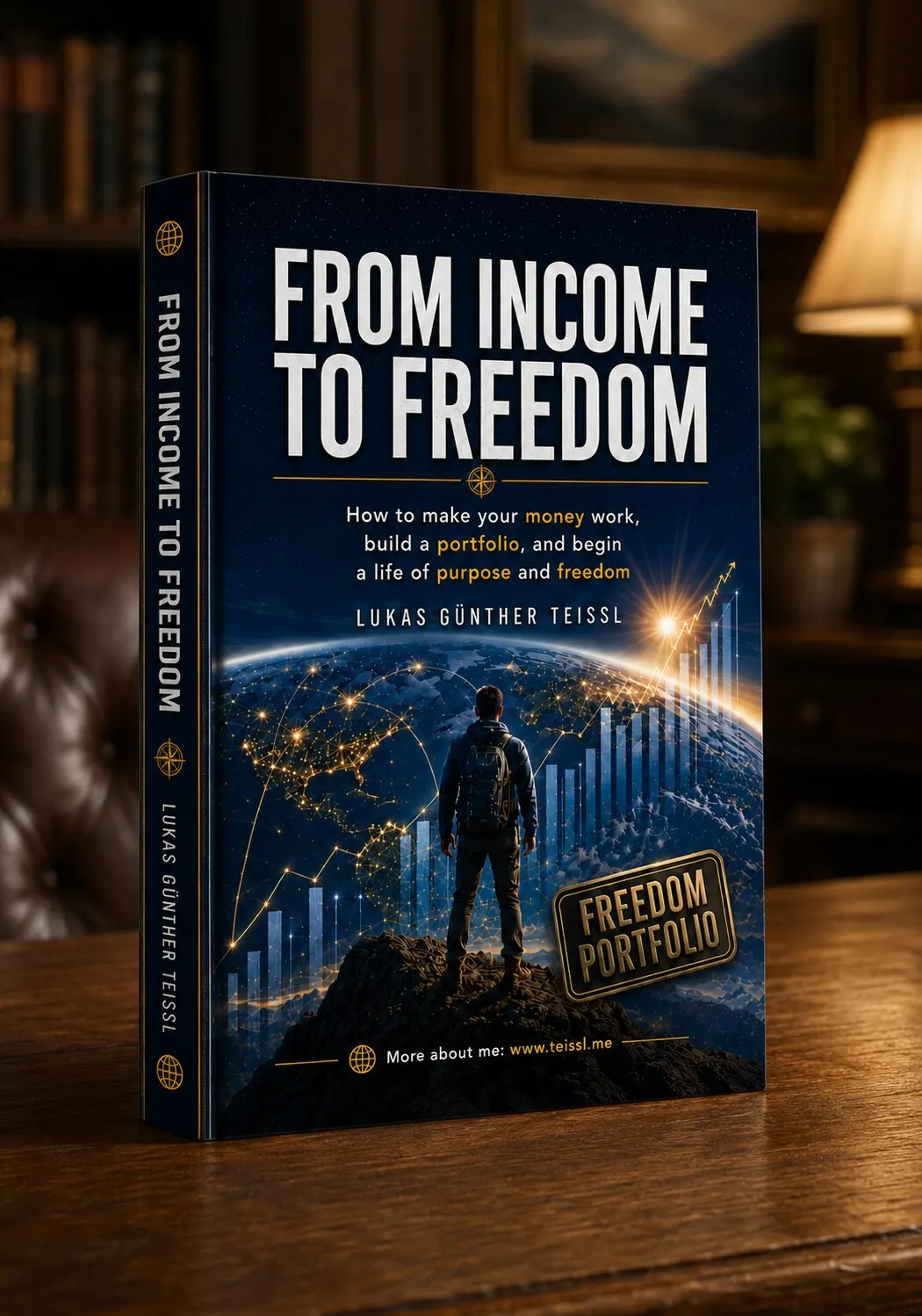
From Income to Freedom
An accessible introduction to conscious money management, reserves, diversification and long-term portfolio building.
Explore the book
Build your system step by step
Structure liquidity, risk, diversification, asset allocation and rebalancing through a clear learning journey.
Explore the courseConclusion
You do not need the perfect product first. You need a clear percentage, a sensible order and rules that remain useful when markets are unsettled or life develops differently from your original plan.
Your future wealth is not determined by income alone, but by how much of that income continues working for you.
Sources & further information
- Asset Allocation and DiversificationInvestor.gov / U.S. Securities and Exchange Commission · Accessed: August 13, 2026View original source
Guidance on time horizon, risk tolerance and allocating money across asset classes.
- Diversify Your InvestmentsInvestor.gov / U.S. Securities and Exchange Commission · Accessed: August 13, 2026View original source
An explanation of diversification and its limitations.
- Dollar Cost AveragingInvestor.gov / U.S. Securities and Exchange Commission · Accessed: August 13, 2026View original source
Definition of investing equal amounts at regular intervals.
- An essential guide to building an emergency fundConsumer Financial Protection BureauPublished: October 29, 2025 · Accessed: August 13, 2026View original source
Guidance on the purpose, construction and personal sizing of an emergency reserve.
Would you like to turn your income into a resilient system?
In a non-binding introductory call, we can structure your objectives, liquidity, current holdings and risks transparently.

Lukas Günther Teissl
Lukas Günther Teissl combines long-standing IT experience, system development and structured business analysis. The knowledge centre explains technical and strategic relationships clearly, practically and without unnecessary simplification.